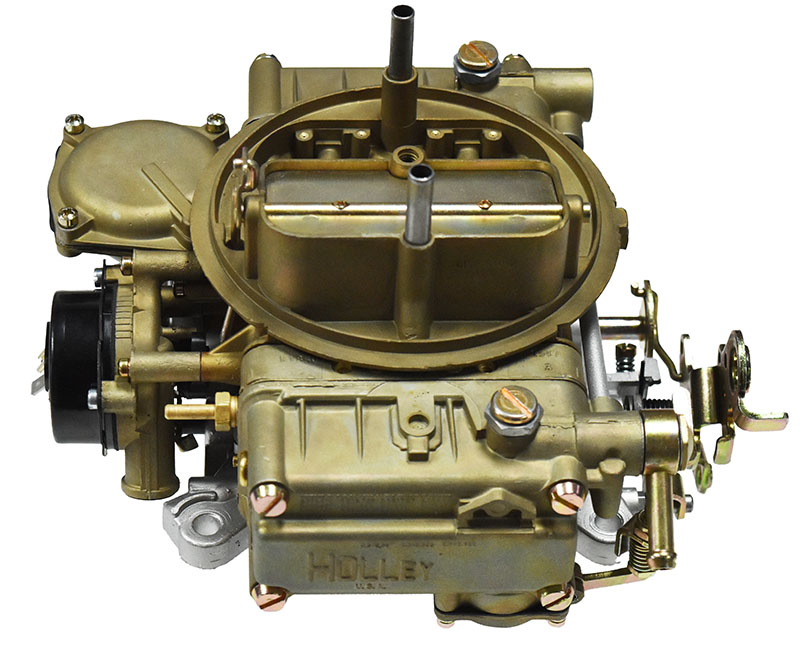
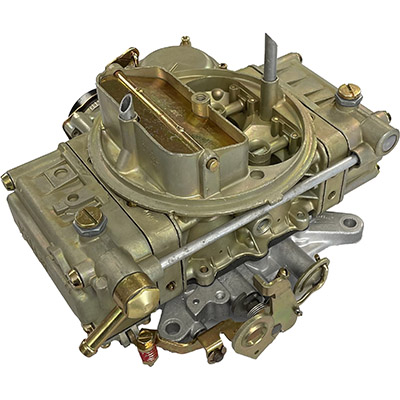
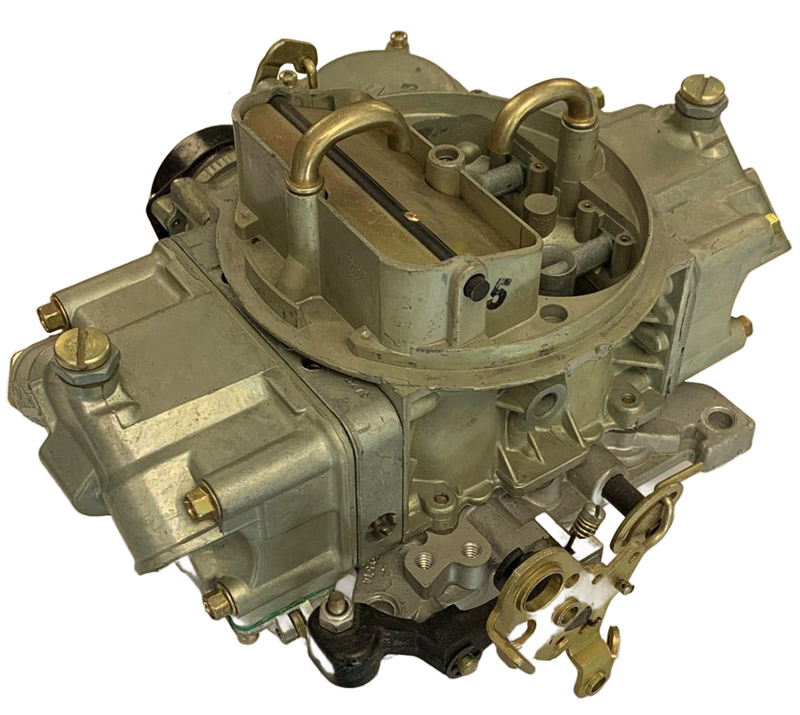
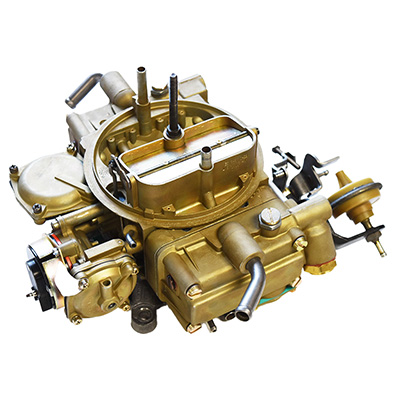
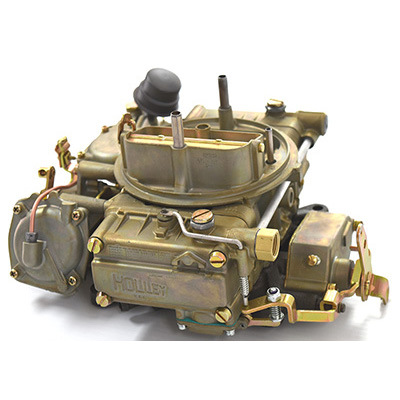
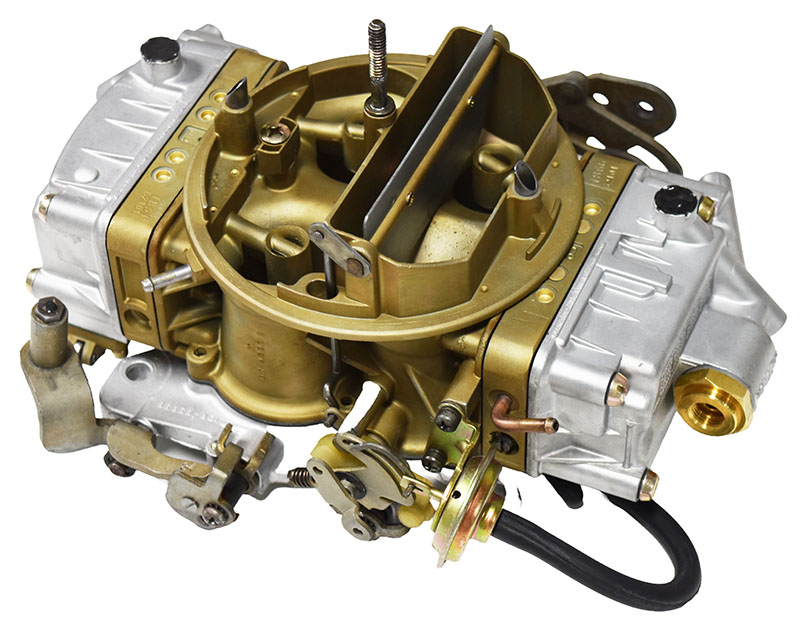
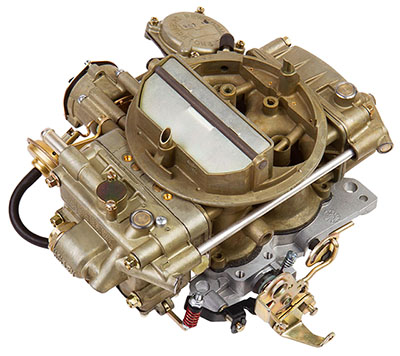
CK7920 carburetor kit for Holley 4150 and 4160- carbs with externally adjustable needle/seats -
When you think of Holley four barrels the first thing that comes to mind is the vacuum or mechanical secondary four barrels you see every day on muscle cars, daily drivers and just about anywhere there's a V-8 under the hood. This isn't the first or the only type of Holley four barrel, but millions have been produced since their introduction in 1957 on the Ford Thunderbird 312 V-8 and the Ford truck 272 V-8. Incidentally, the first 'LIST' number in sequence was R-1214, which was a governed Holley model 4150G on that 1957 Ford truck. The T-Bird carb was R-1272, so numerically, at least, the truck was first.
LIST Numbers
Before going any further, Holley's numbering system deserves a bit of explanation. In the Holley world, carbs are referred to by their 'LIST' number, or just called by that number, so you'll hear of a carb referred to as a LIST 3310 or just '3310' (that's a long-standing 750 cfm vacuum secondary carb, more about that later). LIST refers to the list of parts that go into building that carburetor, so 3310 must have come after about 3,309 prior models. This LIST number is usually stamped on the carb with the word 'LIST' in front of the number, but sometimes not, and sometimes with an 'R-' in front. In catalogs, carbs get referred to by their R-numbers, so R-3310 in this case. You can read about how to find LIST numbers on various Holley models here.
Modular Design
The idea of a parts list for naming a carb especially makes sense if the carbs are modular, that is, made from an assortment of parts (like float bowls, metering blocks, jets and so on) that can be combined in different ways to make units with different performance and features. That was the idea that led to the modern Holley four barrel that started being produced in 1957. Thus, using the same basic design and mostly interchangeable parts, you can build a vast number of different combinations. You can find parts for Holley carbs from their LIST number in our Holley numerical index.
Common Modular Holley Carbs - Squarebore
Squarebore refers to the primary and secondary throttle bores being the same size (or very close) and using the Holley squarebore flange. The 'square' flange is actually 5.16" center-to-center wide on the mounting studs and 5.625" long.
Model 4150 carbs have a secondary metering block between the main body and rear float bowl
Model 4160 carbs have a metering plate, so they are shorter overall (back-to-front)
Model 4180 carbs are similar to 4160 carbs, but have the idle mixture screws under the front float bowl, in the throttle body. 4150/4160 idle screws are in the metering block
Model 4150G carbs have a governor diaphgram on the passenger side front. These are used on trucks. Not for performance.
Spreadbore Carbs
These have secondary throttle bores that are a lot bigger than the small primaries. The idea is to drive at moderate speed on the small primaries for economy and the open the big secondaries for performance. Holley spreadbores use the same flange dimensions as Rochester Quadrajets. These are 4.25" wide on the bolt centers and 5.62" deep. Many spreadbore Holleys were intended as Quadrajet replacements for use on QJet manifolds.
Model 4165 carbs are double pumpers, with accelerator pumps on both primary and secondary float bowls.
Model 4175 has vacuum secondaries and there is only one pump, on the front float bow.
Mechanical vs Vacuum Secondaries
Mechanical secondary carbs have a mechanical linkage that opens the secondary throttles progressively after the primaries are open to a pre-set point, typically around 40% opening. On the other hand, vacuum secondary carbs open after this point is reached, but are pulled open by a diaphgram as vacuum builds up due to increased air velocity. In other words, the mechanical linkage is forced open, so there has to be a secondary accelerator pump to add fuel to compensate for the rush of air when the secondaries open. The vacuum secondary carb opens more gradually as the air velocity increases, so a secondary pump isn't needed because enough fuel is always pulled over from the secondary venturis.
This way, mechancial secondaries can give more accleration, but at the expense of using a lot more fuel. Vacuum secondaries are generally more economical and are usually favored for street use.